
Essential Oils for Nail Fungus: Lab Evidence vs Reality
Essential oils for nail fungus: what lab studies on tea tree, oregano and others show, why that is not the same as clearing a nail, and skin-safety cautions.
Tea tree oil, vinegar soaks, and other natural approaches — what the evidence actually says.

Essential oils for nail fungus: what lab studies on tea tree, oregano and others show, why that is not the same as clearing a nail, and skin-safety cautions.

Coconut oil for toenail fungus: what the lab research shows, why there is no proof it clears an infected nail, how people use it, and when to see a doctor.
Vicks VapoRub for toenail fungus: one small 2011 study, what it actually found, why it is not a proven treatment, and when to see a doctor instead.
Snakeroot extract (undecylenic acid) has more history as a real antifungal than most home remedies — here’s what it can and can’t do for a nail infection.
Overcoming Onychomycosis vs tea tree oil: a $49 diet plan against a $10 bottle. What each can realistically do for nail fungus, and when to use both.

How long do home remedies take for nail fungus? Longer than most people expect — here’s a realistic checkpoint schedule before you judge one as failed.
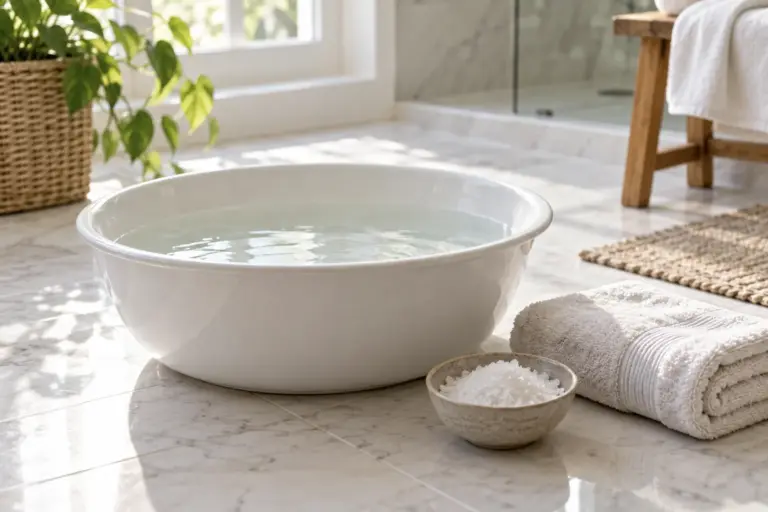
Hydrogen peroxide soaks for toenail fungus have weak evidence of benefit and a real risk of skin irritation. Here’s when it can do more harm than good.
Oregano oil has more lab evidence against nail fungus than most home remedies, but also more risk — it’s potent enough to burn skin if used undiluted.
Listerine foot soaks for toenail fungus are all over the internet. Why people believe it works, and why there’s no real evidence it treats the infection.
Claims that baking soda cures nail fungus rest on a lab theory that’s never been tested on real infections. What it might help with, and what it won’t.